Heat builds above.
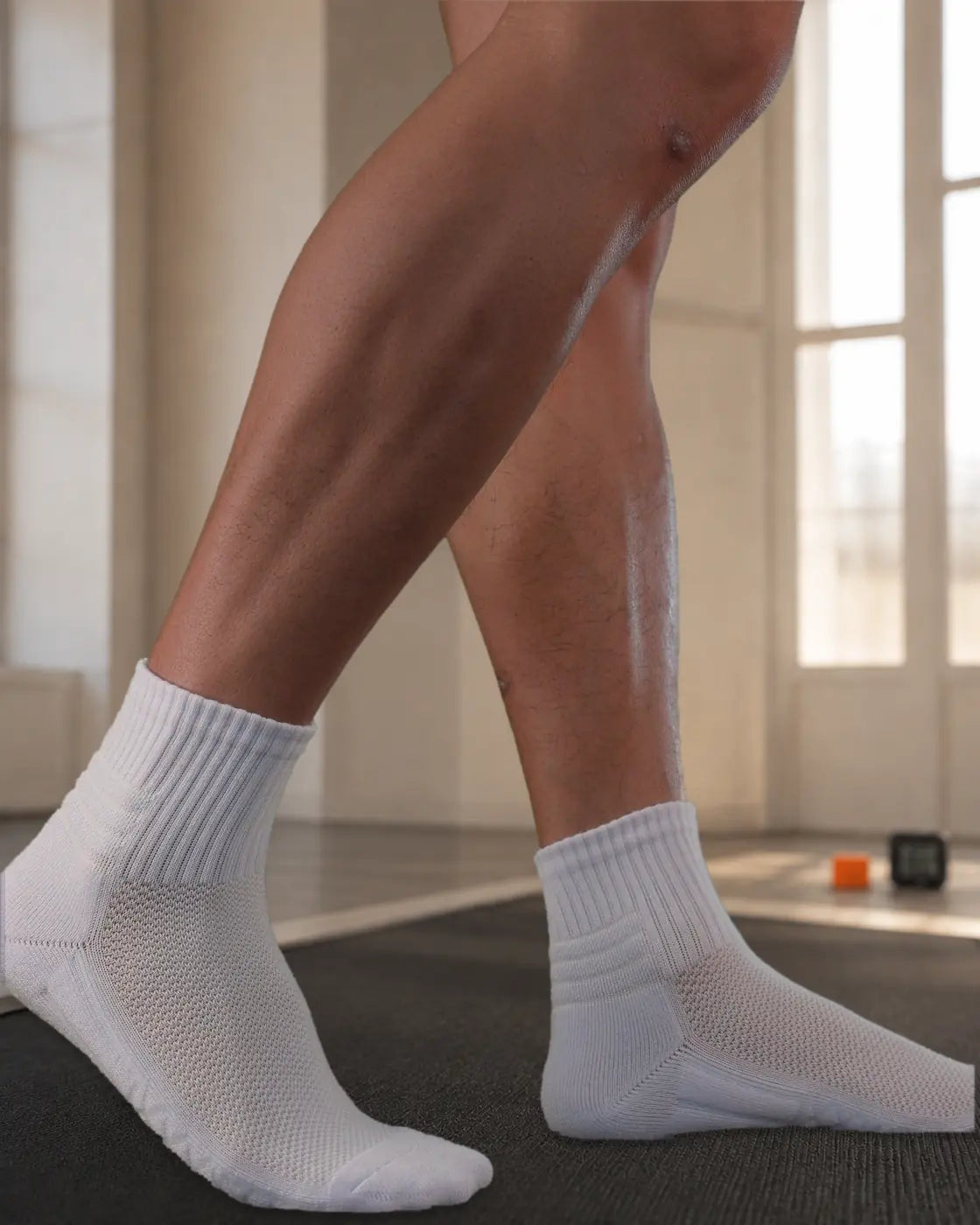
The top of the foot needs openness, not the same density as the sole.
T0 Lab · About
We treat the everyday sock as a small piece of equipment. Observe the friction, change one thing, wear it again—and let the full session decide what stays.
WHY T0 EXISTS ↓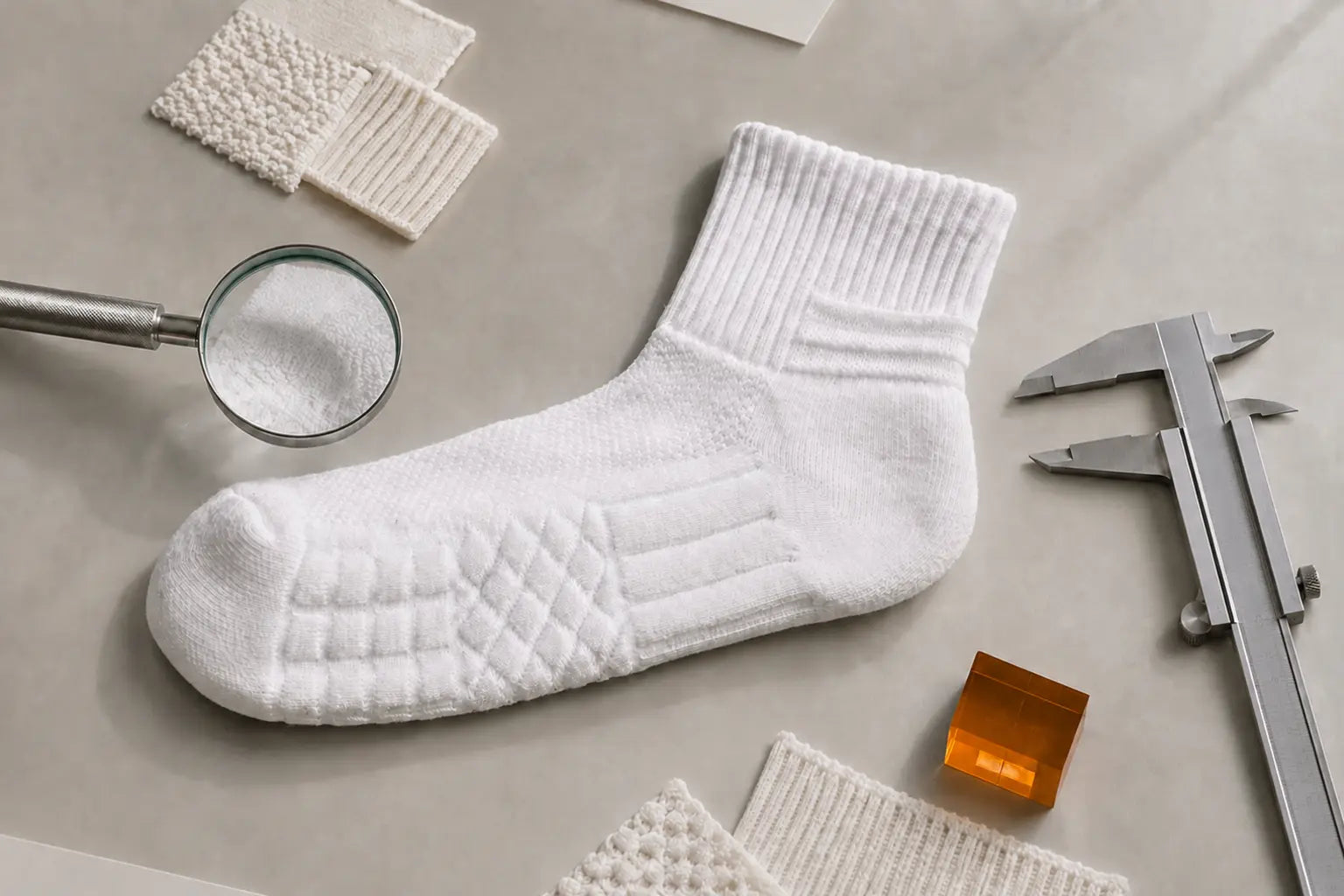
Why T0 exists
“Daily,” “training” and “performance” are labels. The foot feels something more specific: heat over the instep, lost cushion under repeated contact, movement at the heel or pressure at the cuff. That is where our work starts.
The problem, divided
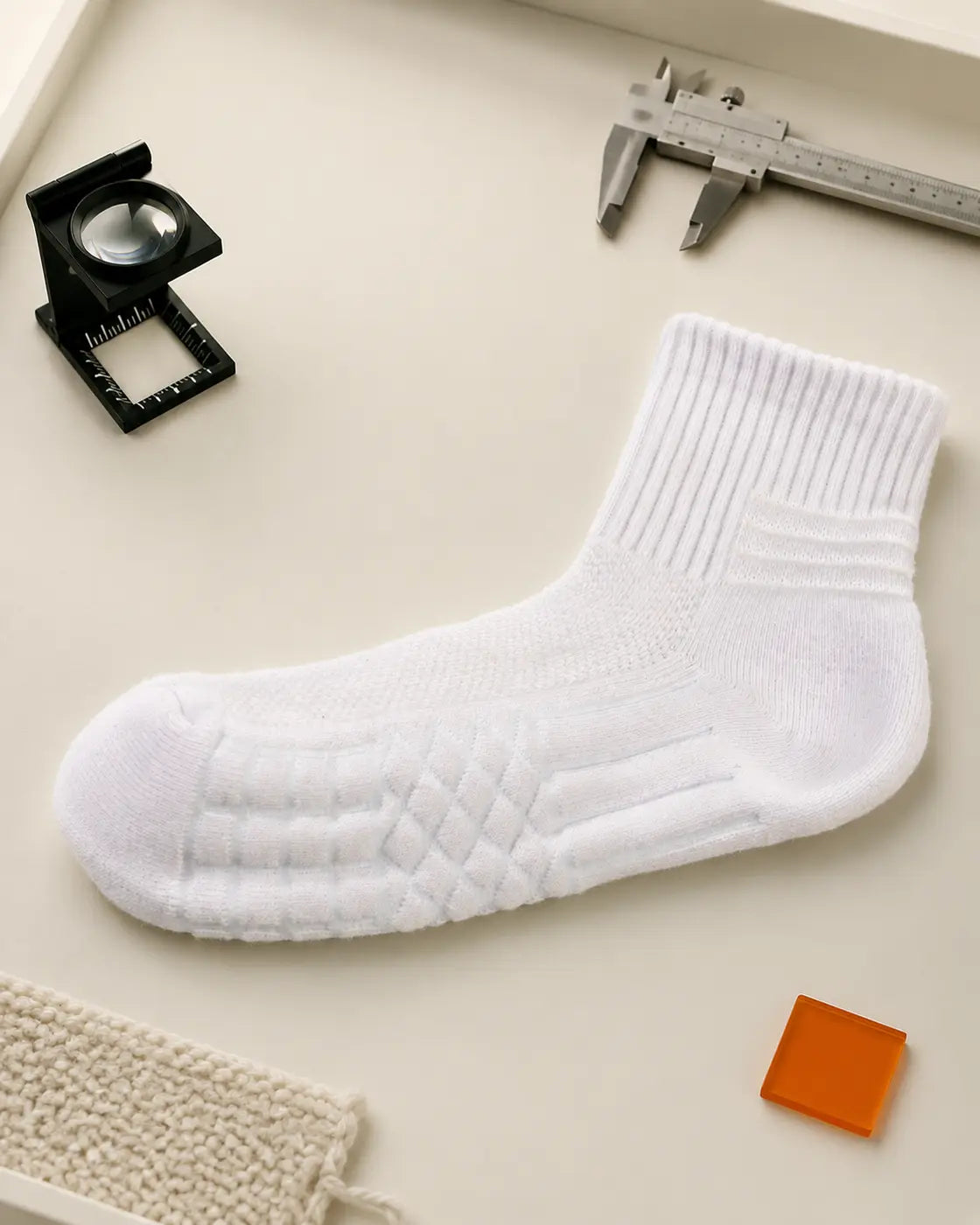
A sock does not need equal thickness everywhere. It needs the right construction in the right place.
The top of the foot needs openness, not the same density as the sole.
Repeated shoe contact asks more from the toe, forefoot, heel and underfoot.
A sock can feel soft and still become distracting when the cuff or heel will not settle.
The name is the method
T0 is where observation begins. D7 is the first current product. What comes next has to pass through the same process.
Field principle 01
T0 is the baseline: the ordinary moment before a product gets in the way. We look for heat, pressure, slipping and material fatigue, then isolate the part that needs to change.
Real use · one variable · repeatProduct record 07
It sits between thin everyday socks and bulky all-over cushion. The upper stays more open, the bottom carries substantial terry, and the heel gets its own mapped structure.
Open the full D7 record ↗How the lab works
Good product development should be understandable. Each stage has a question, and each claim needs a visible reason to exist.
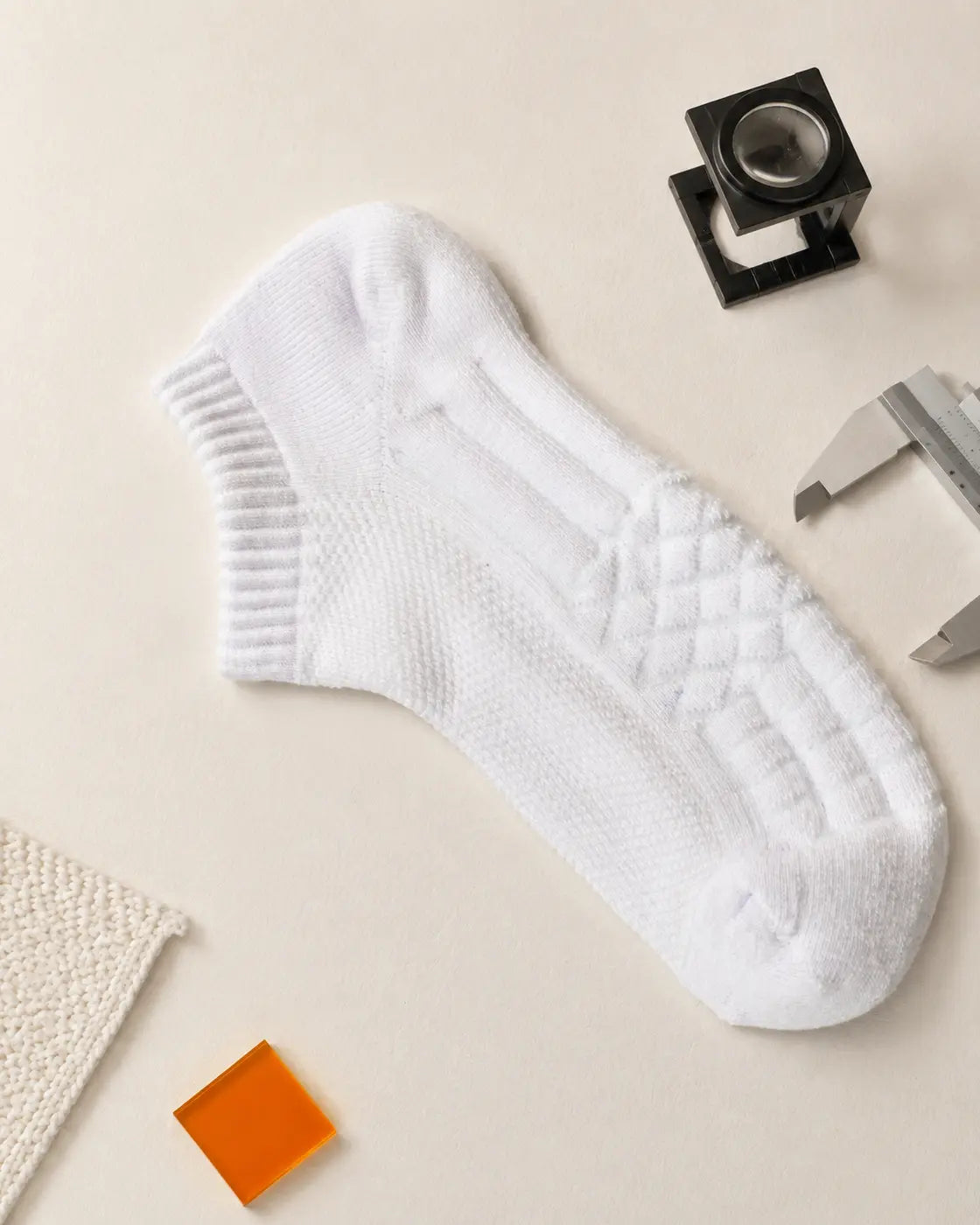
Start with a real moment of friction, not a trend report.
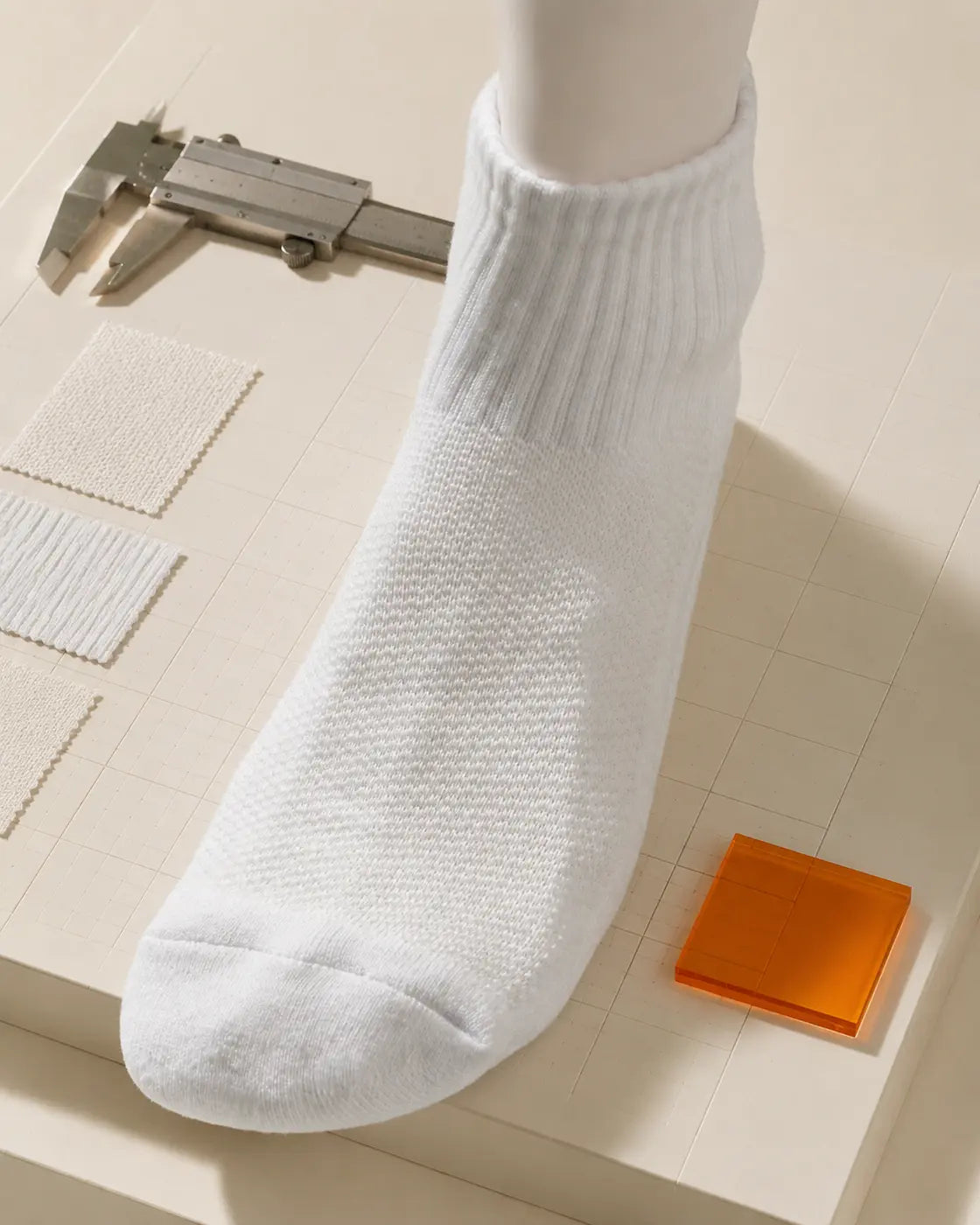
Separate the foot into zones with different jobs.
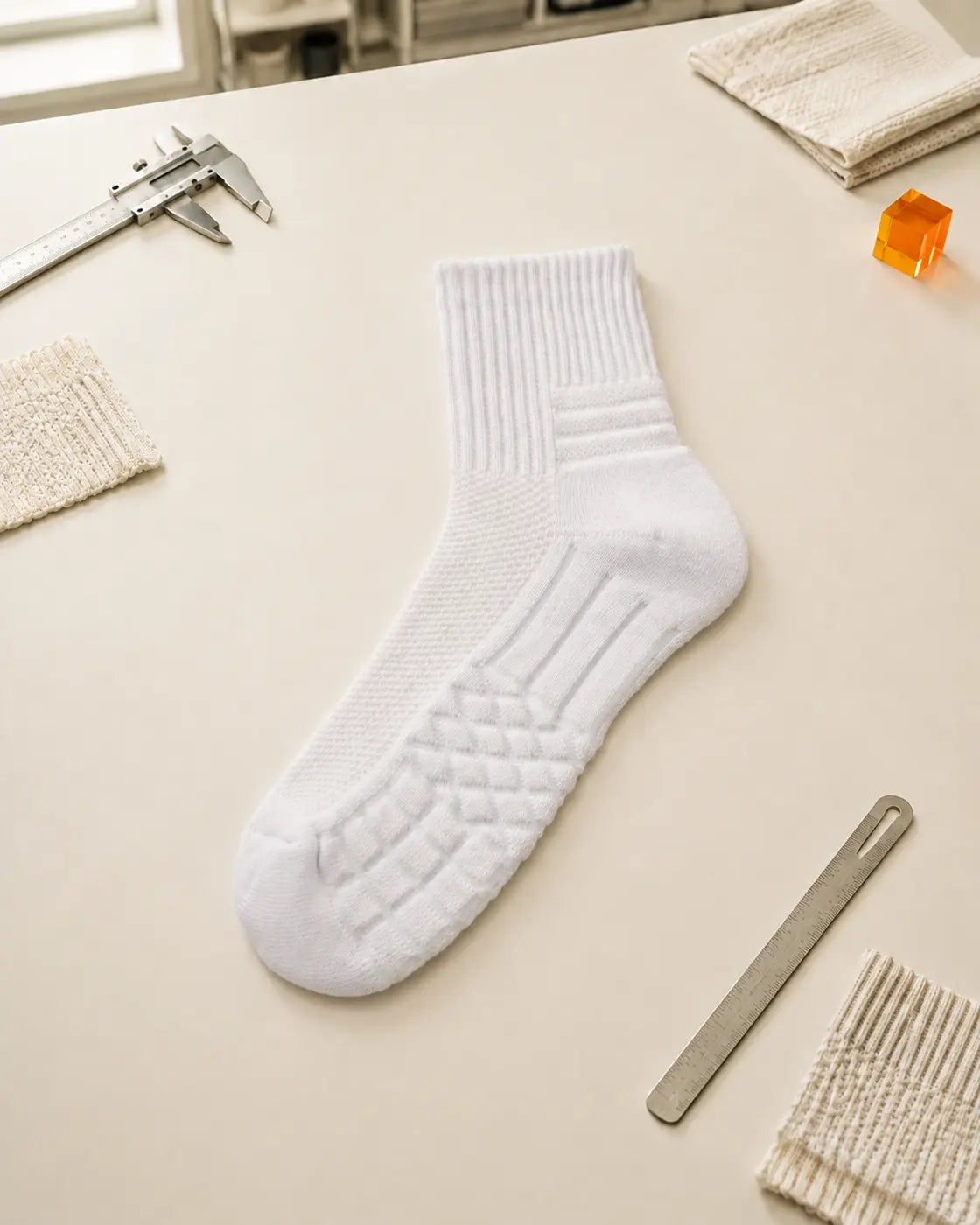
Change one construction variable at a time.
Use the same shoe, activity and duration to compare.
Keep only what improves the full session.
OUR POSITION
What comes next
D7 is the current product. F1 and R1 remain concept programs until physical samples and wear testing define their final specifications.
Start with what is real